
Can Amazon Connect use ElevenLabs voices?
Short answer: yes, and there are now two quite different ways to do it. Amazon Connect's Set voice block lists third-party voice providers, ElevenLabs among them, so your existing prompts can be spoken in an ElevenLabs voice with nothing more than configuration and an API key. That changes how the contact centre sounds. It does not change what the call can do — for that you need an ElevenLabs agent on the call, which is a different thing entirely. Here's what each one covers, and what the caller actually hears.
Looking for the product rather than the explanation? The ElevenLabs voice agent for Amazon Connect is here, with a live demo you can ring.
What Amazon Connect gives you out of the box
Every spoken word in a stock Amazon Connect contact flow comes from Amazon Polly. When you drop a Play prompt block into a flow and type text instead of uploading an audio file, Connect sends that text to Polly and plays the result down the line. You choose the language and the voice, you can shape delivery with SSML — pauses, emphasis, spelling out an order number digit by digit — and you can switch the voice mid-flow with a Set voice block — which now also lists third-party voice providers, ElevenLabs included. Polly's neural voices include Australian English, so an AU contact centre does not have to sound American.
For anything conversational, Connect's native answer is Amazon Lex. A Get customer input block hands the caller to a Lex bot, the bot matches what they said to an intent, fills the slots it needs, and returns control to the flow. Polly still does the talking; Lex decides what gets said.
That combination is capable, well integrated and cheap to run. Its limits are also specific. Polly is text-to-speech: it reads what it is given, and it is not listening. Lex is an intent-and-slot engine: it is excellent at "which of these twelve things do you want" and much weaker at open-ended conversation, at a caller who changes their mind halfway through a sentence, or at being interrupted. And the voice, however good the neural model is, is chosen from a catalogue that every other Connect customer is choosing from too. If it's the engines themselves you're weighing up — neural voices, voice cloning, latency and language coverage — we compare them side by side in Amazon Polly vs ElevenLabs.
So the honest framing of the question is not "can I load an ElevenLabs voice file into Polly" — you can't. It's "can the thing that talks to my callers be an ElevenLabs agent instead of a Polly prompt driven by Lex". That, you can do.
What changes when the voice is an ElevenLabs agent
ElevenLabs builds conversational voice AI: high-fidelity speech generation wrapped around an agent that listens, thinks and replies in a continuous exchange rather than in turns dictated by a menu. Voice quality is the reason we offer it as a named option at all. Bringing that into Amazon Connect means the ElevenLabs agent takes the call inside your contact flow, in place of the Lex-plus-Polly pairing.
Three things change immediately.
- The voice stops sounding like a system. This is the obvious one and it is not cosmetic. Callers behave differently when the thing on the other end sounds like a person: they speak in full sentences instead of barking keywords, and they tolerate a clarifying question instead of mashing zero.
- The conversation stops being a menu. There is no "press or say one". The caller states their problem in their own words, the agent asks the follow-ups it needs, and it copes with a caller who says "actually, no, it's the other order".
- Interruption works. A caller who already knows what they want can talk over the greeting and be understood, rather than waiting out a prompt they've heard forty times.
What does not change is where the call lives. This is the part worth being deliberate about. Some ways of putting an AI voice on a phone number take the call away from your contact centre entirely — the AI answers on its own number, on the vendor's platform, and if a human is needed the caller gets dialled back into your queue as a brand new contact. That splits the contact record, loses the routing context and makes the reporting lie. The ProUCX ElevenLabs Voice Agent for Amazon Connect is built the other way around: the ElevenLabs agent answers inside your Amazon Connect contact flow, on your own instance and your own number, so the call remains one routed Connect contact from ring to wrap-up.
What the caller actually experiences
Take a common Australian service call — a customer ringing to change the delivery address on an order.
Today, on a Polly-and-Lex flow, they hear a greeting, then a menu, then they say "delivery", then they're asked for an order number, then they read it out and it's misheard because the flow wants digits and they said "double four seven one". Two more turns, and they land in a queue anyway.
With an ElevenLabs agent answering, the caller says "hi, I need to change the delivery address on order 4471" and gets a reply that acknowledges both halves of that sentence at once. The agent confirms the order, asks for the new address, reads it back, and either completes the change or explains why it can't. Every turn is transcribed live and scored for sentiment as it happens, so a supervisor is not waiting for tomorrow's quality review to find out how the conversation went.
The caller can also opt out at any point. Asking for a person, going silent, or hitting a limit sends the call straight to a human queue. An AI agent that traps callers is a support problem wearing a cost-saving costume, and the design principle here is that the AI is an optimisation, never a trap.
If you want to hear and see this rather than read about it, the demo console at dev.ai.liveucx.com runs a call end to end — the lifecycle from dial-in to wrap-up, the transcript building turn by turn with sentiment on each message, the back-end systems lighting up as the agent calls them, and the process checklist completing.
How the handoff to a human works
This is where most voice AI quietly fails, and it is the reason to care about staying inside Amazon Connect.
When the ElevenLabs agent decides a person is required, it transfers to a human queue as an ordinary Connect transfer, and it writes what it learned onto the contact attributes of that same contact: a plain-language summary of what the caller wants, the detected intent, and a link to the transcript. Contact attributes are a native Amazon Connect mechanism, which matters for a practical reason — the ProUCX CRM connectors already read them for screen-pop. Nothing has to be rebuilt.
So the human agent picks up and the summary is already sitting beside the matching record: against the person and deal in Pipedrive, on the contact timeline in HubSpot, or in the agent panel in Dynamics 365. The caller does not repeat themselves. That single behaviour — context surviving the handoff — is worth more to average handle time than the voice quality is, even though the voice is what sells the demo.
Because the whole interaction stayed a routed Connect contact, native Connect capabilities still apply to it: call recording, Contact Lens analytics, transfers, and your real-time and historical reporting.
Where the audio is processed — the part AU buyers ask first
We'd rather put this in the middle of the article than bury it. ElevenLabs processes audio outside Australia — there is no ElevenLabs region here. Your Amazon Connect instance, your call recordings and your reporting stay in your own AWS account and region exactly as they do today, but the voice AI itself is an offshore hop.
For a lot of buyers that is a non-issue. For Australian government, health and financial-services organisations with a contractual residency obligation, it is the whole conversation. If that's you, the ElevenLabs option is probably not your default — the broader Live AI Agent product is voice-vendor-flexible and can run an Australian speech path instead. Tell us the constraint before you subscribe, not after.
What it costs
There are four cost lines under any AI voice agent on Amazon Connect, and only one of them is ours: Connect service and telephony minutes (billed by AWS at your region's published rates), speech, the language model, and the agent licence. An AI call consumes Connect voice minutes exactly like a human-handled one — the saving is in the agent's time, not the telephony.
The ProUCX ElevenLabs Voice Agent in Amazon Connect is listed on AWS Marketplace in bundles priced at US$300, US$1,000 and US$3,000, so it bills against the AWS account you already have rather than through a new procurement. Check the listing for the current bundle sizes and terms. We've broken the full cost model down separately in what an Amazon Connect AI voice agent actually costs.
The short version
Amazon Connect can't play ElevenLabs audio through Polly, and it doesn't need to. What it can do is hand the call to an ElevenLabs agent inside your own contact flow, keep it as one Connect contact, and pass the conversation to a human with the context attached. Decide on residency first, voice second — that order saves rework.
Common questions
Can Amazon Connect use ElevenLabs voices?
Yes, and there are now two different ways. Amazon Connect’s Set voice block lists third-party voice providers with ElevenLabs among them, so your existing prompts can be spoken in an ElevenLabs voice with nothing more than configuration and an API key. That changes how the contact centre sounds. Putting an ElevenLabs agent on the call is a different thing, and it changes what the call can do.
What is the difference between an ElevenLabs voice and an ElevenLabs agent?
A voice reads what the flow hands it. An agent listens, decides and acts. Swapping the voice makes a menu sound better; it does not make the menu a conversation. If the caller is expected to explain something in their own words, you need the agent rather than the voice.
How do you configure an ElevenLabs voice in a contact flow?
Through the Set voice block: choose the third-party provider, set the model, voice and language, and point it at the AWS Secrets Manager secret holding your API key. It is a flow change rather than a deployment, and it is reversible.
Is the ElevenLabs audio processed in Australia?
No. ElevenLabs processes audio outside Australia — there is no ElevenLabs region here. Your Amazon Connect instance, your call recordings and your reporting stay in your own AWS account and region exactly as they do today, but the voice AI itself is an offshore hop. For organisations with a contractual residency obligation that is usually the whole conversation, and the broader Live AI Agent product is voice-vendor-flexible and can run an Australian speech path instead.
What happens when the AI agent hands the call to a person?
It transfers to a human queue as an ordinary Amazon Connect transfer, and writes what it learned onto the contact attributes of that same contact: a plain-language summary, the detected intent and a link to the transcript. Contact attributes are a native Connect mechanism, and the ProUCX CRM connectors already read them for screen-pop, so the human agent picks up with the summary beside the matching record and the caller does not repeat themselves.
Does Amazon Connect still use Amazon Polly?
Yes, by default. Every spoken word in a stock contact flow comes from Polly: drop in a Play prompt block, type text instead of uploading audio, and Connect sends it to Polly. The Set voice block is what lets you switch that — including to a third-party provider.
What does an ElevenLabs voice agent cost on Amazon Connect?
There are four cost lines and only one is a licence: Amazon Connect service and telephony minutes billed by AWS at your region’s published rates, speech, the language model, and the agent licence. An AI-handled call consumes Connect voice minutes exactly like a human-handled one — the saving is agent time, not telephony. The licence is listed on AWS Marketplace in bundles at US$300, US$1,000 and US$3,000; check the listing for current bundle sizes and terms.
Put an ElevenLabs voice on your Amazon Connect number
See the product page, or subscribe against the AWS account you already have.
ElevenLabs Voice Agent for Amazon Connect · View on AWS Marketplace
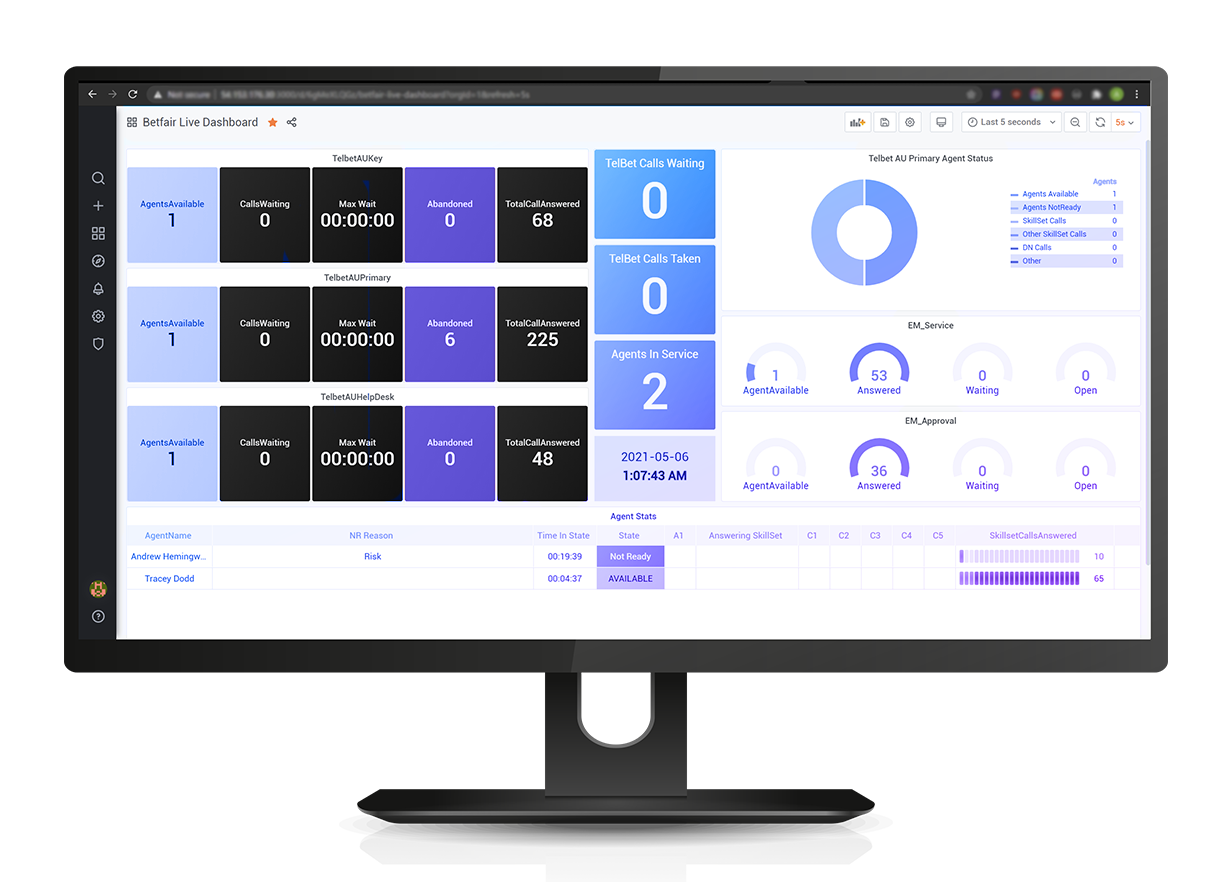
Four practical routes — a Lex bot in the contact flow, Bedrock with a custom Lambda, an external agent bridged in, or a packaged product from AWS Marketplace — and how to choose between them.
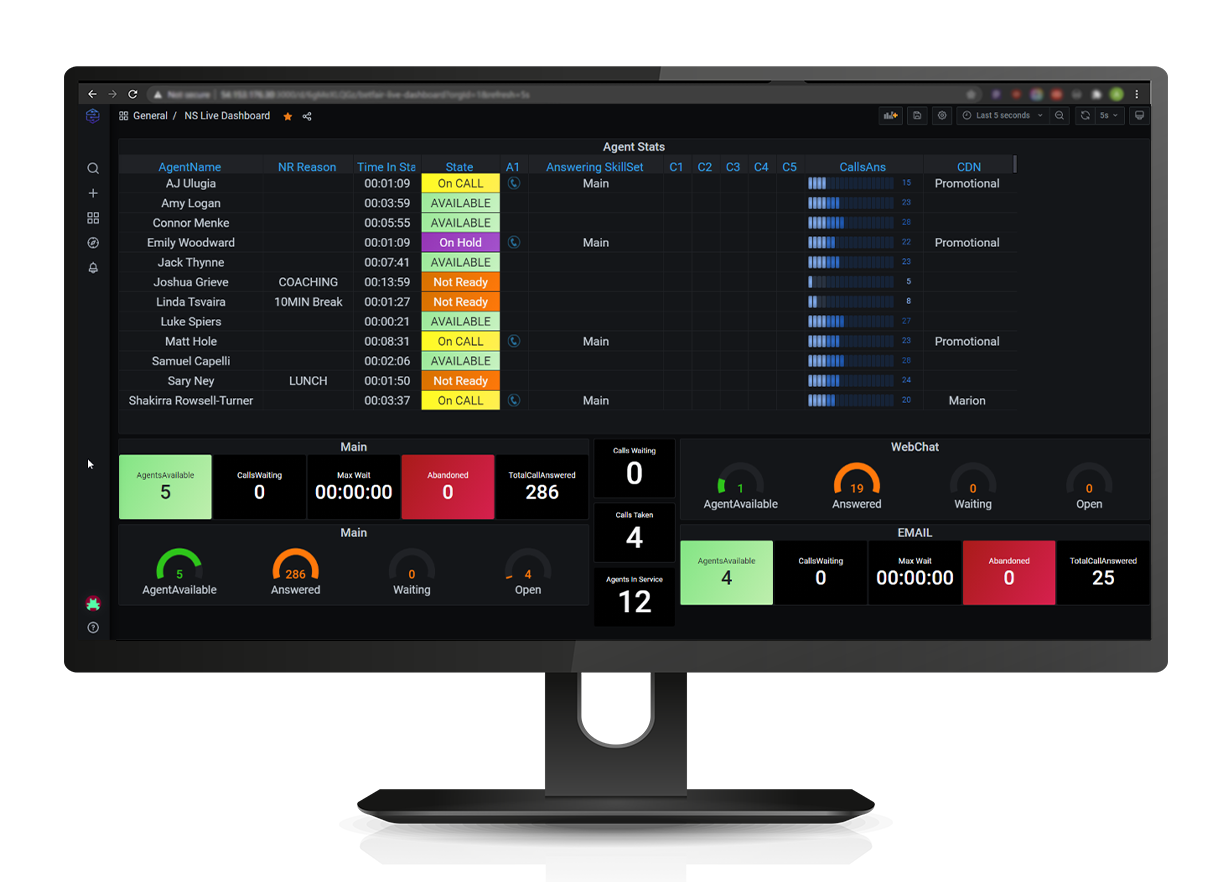
Four cost lines sit under every AI agent — Connect telephony, speech, the model and the licence. A worked example on 1,000 calls a month, and the four places the cost curve bends.
Lex is cheap, native and predictable until the intent list stops describing your callers. Where the design breaks, what a generative agent changes, and why containment beats deflection.