
Amazon Connect’s own workforce management
Four capabilities, billed per agent per month — and three WFM basics its own page never mentions. Amazon Connect has had native workforce management for a while now, which makes the real question not whether it exists but whether it replaces what you are paying NICE, Aspect or Verint for. This page sets out what AWS says its WFM does, using AWS’s own optimisation page read on 21 October 2026, what that page is silent on, and the two operational details that decide whether a trial is reversible. We do not sell workforce management, so there is nothing for us to talk you into here.
The four capabilities AWS names
- Forecasting. AWS’s own heading is “forecast service workloads with AI”. It projects incoming contact counts and typical handle durations, and intraday forecasts give a rest-of-day prediction refreshed every fifteen minutes.
- Capacity planning. Estimates the full-time-equivalent agents needed to hit a service-level goal, with what-if analysis so finance, HR and training can test targets rather than argue about them.
- Scheduling. Generates individual schedules from agent skills, short-term forecasts, shift patterns and your own internal rules. Supervisors review and adjust before anything reaches agents, who see their schedule in the agent workspace.
- Intraday agent request management. Agents can take overtime or time off within parameters you set, and AWS describes AI making real-time adjustments such as moving or adding rest breaks.
That is a genuine WFM core: forecast, plan, roster, and handle the day as it changes. For a contact centre currently rostering in a spreadsheet, it is a large step up and it is already in the platform.
It is one of only two things billed per agent per month
This is the part that surprises people who chose Amazon Connect for consumption pricing. The platform’s channels are billed per message and per minute with, in AWS’s words, “no seat-based licensing requirements” — but forecasting and agent scheduling is one of exactly two dimensions charged per agent per month, the other being performance evaluations. We set out the full structure in what Amazon Connect actually costs.
The practical consequence is that WFM cost scales with headcount and not with call volume, so a quiet month does not reduce it. That changes the comparison against a third-party WFM considerably: you are no longer weighing a per-seat licence against a consumption platform, you are weighing two per-seat licences, and the native one has the advantage of being on an AWS bill you already reconcile.
Three things AWS’s page does not mention
Stated carefully, because silence on a marketing page is not the same as absence from a product. These are the areas AWS’s optimisation page says nothing about, and each is something established WFM suites sell on:
- Real-time adherence. Intraday forecasting is covered; watching whether each agent is actually in the state their schedule says, and alerting a supervisor when they are not, is not described.
- Shift bidding and swapping. The page refers to shift patterns and to agents requesting overtime or time off. Agents bidding for shifts, or trading them with each other under rules, is not described.
- Payroll. Not mentioned at all. If your rostering has to produce something a payroll system can consume, treat that as an integration you will build.
So the right question for AWS or your partner is not “does Amazon Connect have WFM” — it does — but whether these three are in it today, and to get the answer in writing before you retire a licence you are already paying for.
The compliance sentence to read before you roster anyone
AWS’s own FAQ on that page states the feature “is not designed to ensure compliance with any particular laws” and that customers are responsible for their own use, including employment regulations. Every WFM vendor says some version of this, and it is normally boilerplate. In Australia it is not.
Rosters here sit under modern awards and enterprise agreements with rules about minimum shift lengths, break spacing, consecutive days, notice of change and penalty-rate boundaries. A scheduler that optimises for service level without encoding those rules will produce rosters that are efficient and non-compliant, and the exposure is yours. If you are in an award-covered or union environment, the question to settle early is where those rules get encoded — in the scheduling rules you configure, in a third-party WFM that ships award interpretation, or in a manual review step somebody actually performs. Do not assume the AI handles it, because AWS has told you it does not.
Two operational details worth knowing before a trial
- It has to be switched on. The capability must be enabled for your Amazon Connect instance rather than simply appearing, and language and regional availability vary — check your own region before planning a rollout, particularly outside the largest AWS regions.
- Deactivating deletes the data after thirty days. AWS states that if the feature is deactivated, related data is automatically deleted after 30 days. That makes a trial genuinely reversible, but it also means a decision to pause is a decision to lose your forecast history unless you have exported it. Plan the export before the trial, not after.
When you would still buy a third-party WFM
Three situations, in our experience of the estates we integrate with. First, if real-time adherence is how your supervisors actually run the floor, you need to confirm it exists natively or keep the tool that provides it. Second, if your awards or agreements are complex enough that you currently rely on a vendor’s award interpretation, replacing that with scheduling rules you configure yourself is a compliance project, not a procurement saving. Third, if you run more than one contact centre platform, a WFM inside one of them will only ever roster that one — and multi-platform estates are common and long-lived.
Against that, the native option removes an integration, puts the cost on an existing AWS bill, and reads the forecast from the same data the routing engine already produces. The vendors ranking alongside AWS for this term — NICE and Aspect among them — publish their own Amazon Connect integrations, so running a third-party WFM on top of Amazon Connect is a well-trodden arrangement rather than an exotic one.
What we do and do not sell here
We do not sell workforce management, and nothing on this page is a pitch for one. We build CRM integrations for Amazon Connect — screen-pop, click-to-dial and call logging inside Dynamics 365, HubSpot and Pipedrive — and real-time dashboards.
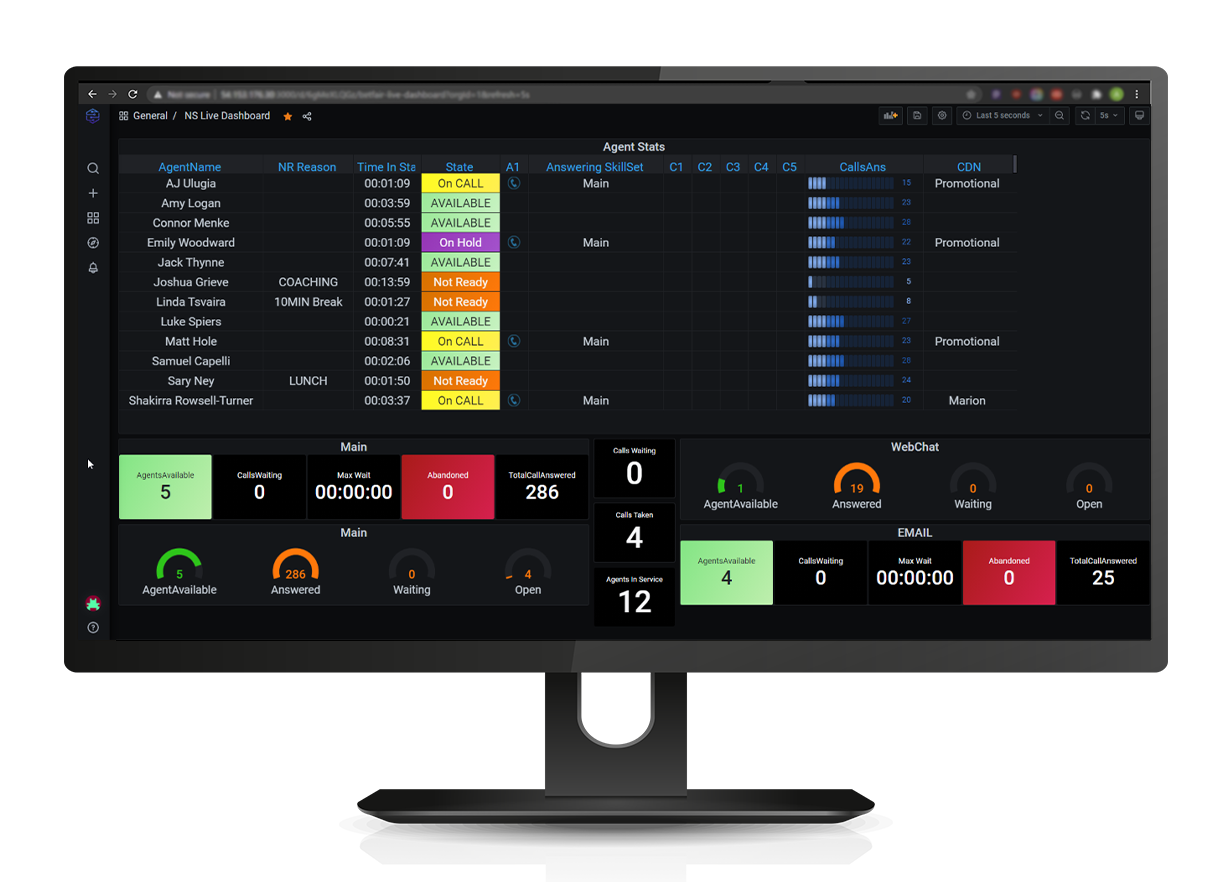
Those dashboards are worth distinguishing from WFM rather than blurring into it, because the two get conflated in procurement. LiveUCX is a wallboard: it shows what is happening now, on a screen the floor can see. A WFM decides who should be rostered next Tuesday and whether today’s plan is holding. A wallboard will not forecast or roster, and a WFM is not a wallboard. If you are being sold one as the other, by us or anyone else, that is worth questioning.
Where we do have a view is on getting data out of an incumbent platform, because we have done it: see getting your call recordings out of Verint before you switch platforms, where the same point about exporting before you deactivate applies with much larger numbers attached.
The short version
Amazon Connect’s native WFM is real and covers forecasting, capacity planning, scheduling and intraday requests. It is billed per agent per month, which makes it a per-seat licence competing with other per-seat licences rather than a free inclusion. AWS’s page is silent on real-time adherence, shift bidding and payroll, and explicit that the feature is not designed to ensure legal compliance — which in an award-covered environment is the sentence that decides the project. Get those answers in writing, check your region, and plan the data export before the trial.
Common questions
Does Amazon Connect have workforce management?
Yes. AWS’s optimisation page names four capabilities: forecasting, which projects contact volumes and handle times with intraday forecasts refreshed every fifteen minutes; capacity planning, which estimates the full-time-equivalent agents needed for a service-level goal; scheduling, which builds individual rosters from skills, forecasts, shift patterns and your own rules; and intraday agent request management for overtime and time off. The capability has to be enabled on your instance.
How much does Amazon Connect workforce management cost?
Forecasting and agent scheduling is billed per agent per month, which makes it one of only two Amazon Connect dimensions charged that way — the other is performance evaluations. The cost therefore scales with headcount rather than with call volume, so a quiet month does not reduce it. Take the current rate from AWS for your region; the structure is set out in what Amazon Connect actually costs.
Does Amazon Connect WFM do real-time adherence?
AWS’s optimisation page does not mention it, which is not the same as the product lacking it. Intraday forecasting and intraday agent requests are both described; monitoring whether each agent is in the state their schedule says and alerting a supervisor when they are not is not. If adherence is how your supervisors run the floor, get a written answer before retiring a tool that provides it.
Can Amazon Connect WFM handle modern awards and enterprise agreements?
AWS states the feature “is not designed to ensure compliance with any particular laws” and that the customer is responsible for their own use, including employment regulations. So award and agreement rules — minimum shifts, break spacing, consecutive days, notice of change, penalty-rate boundaries — have to be encoded in the scheduling rules you configure, carried by a third-party WFM with award interpretation, or caught in a manual review step. Decide which before you roster anyone.
What happens to the data if we turn Amazon Connect WFM off?
AWS states that when the feature is deactivated, related data is automatically deleted after 30 days. A trial is therefore genuinely reversible, but pausing also means losing forecast history unless it has been exported. Plan the export before the trial rather than after the decision.
Is a real-time wallboard the same as workforce management?
No, and conflating them causes real procurement mistakes. A wallboard shows what is happening now on a screen the floor can see. A WFM forecasts demand, plans capacity, builds rosters and manages the day against that plan. A wallboard will not roster anyone and a WFM is not a wallboard. We sell the former and not the latter.
Integrating Amazon Connect with a CRM while you sort the workforce question out? Tell us the CRM and we will tell you what the connector covers. If you are moving off an incumbent platform, the recording-export problem is usually the long pole.
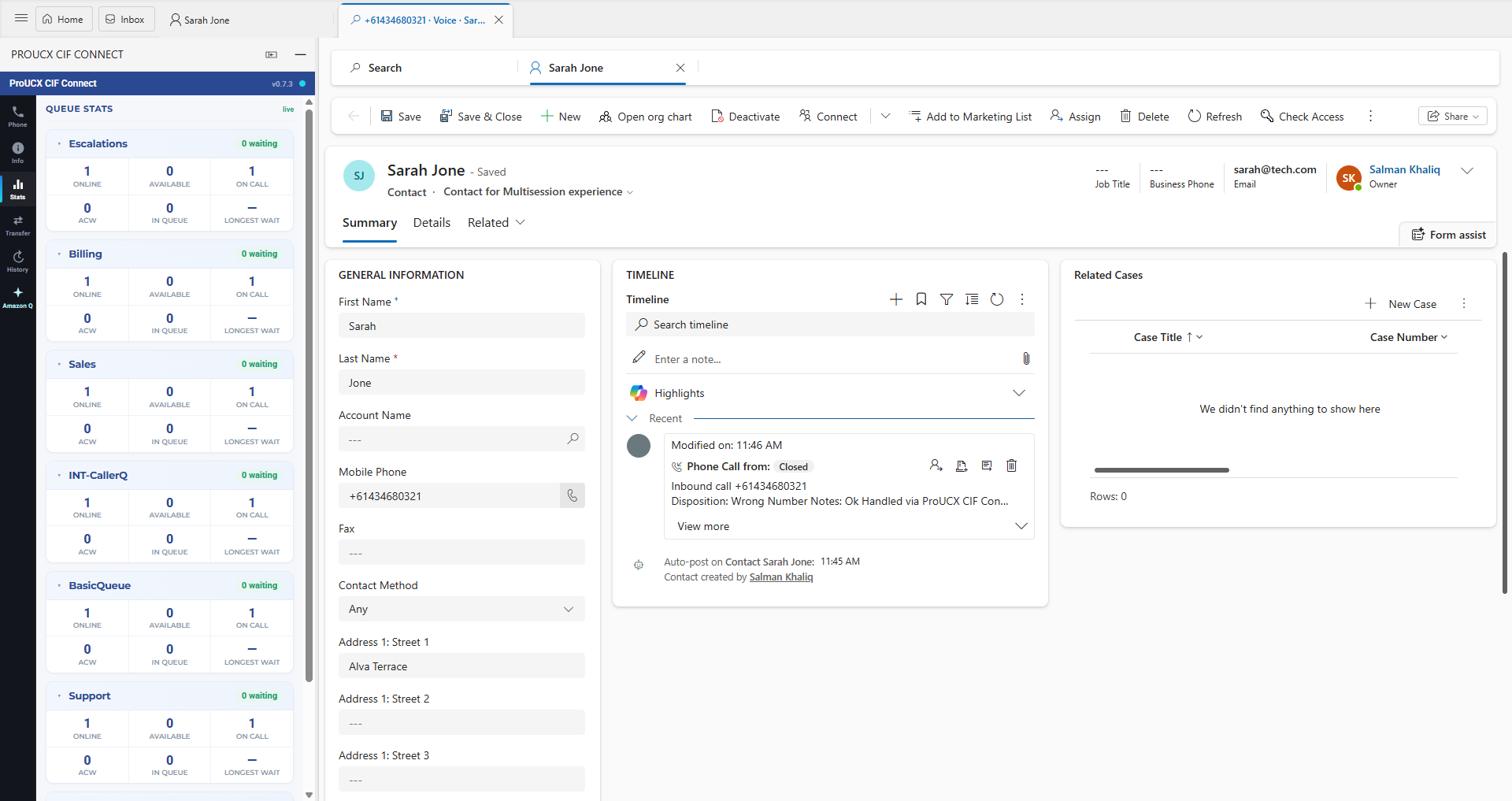
Link, embed, CTI or full workspace — four products at four prices. What screen-pop really requires, how logging differs per CRM, and the eight questions to ask before signing.
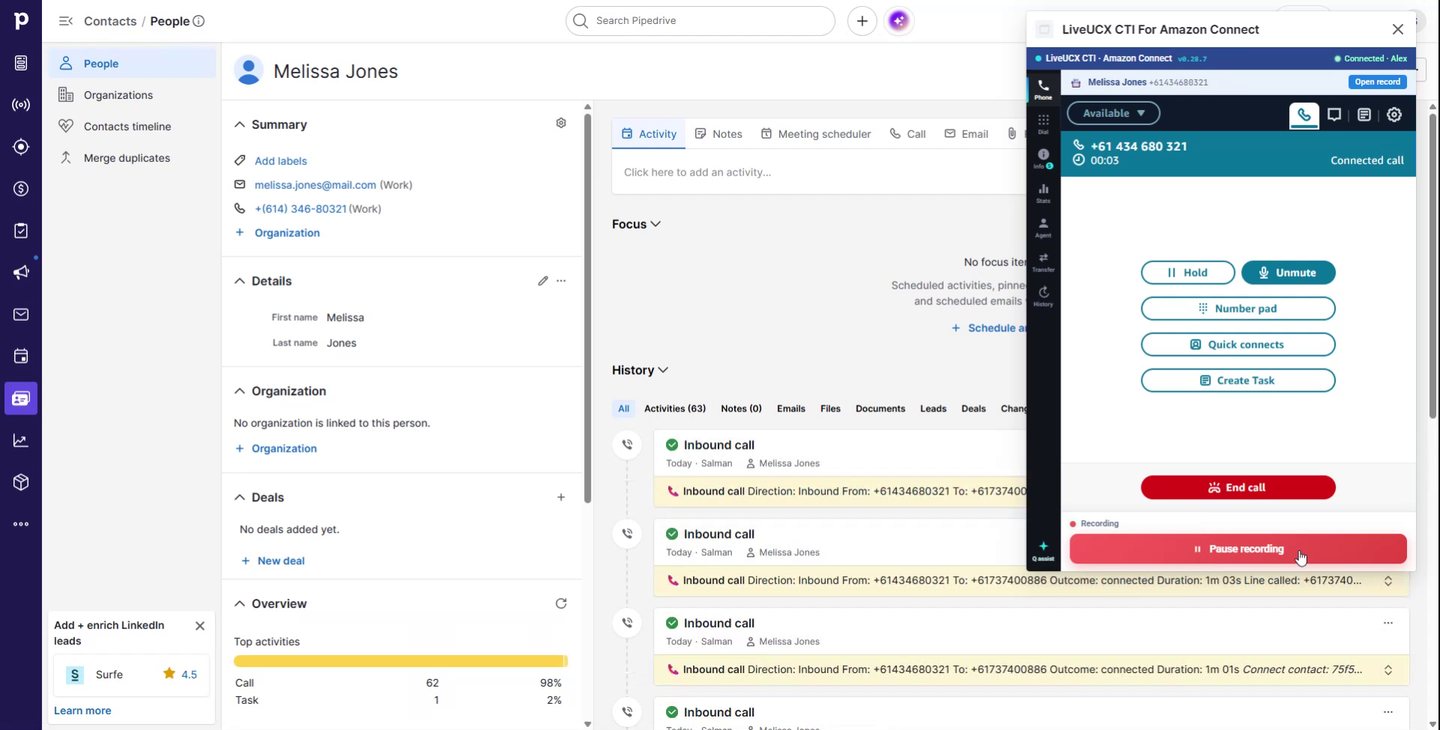
What Pipedrive’s built-in calling covers, where a CRM stops being a contact centre, and what changes when an Amazon Connect CTI takes over the call.
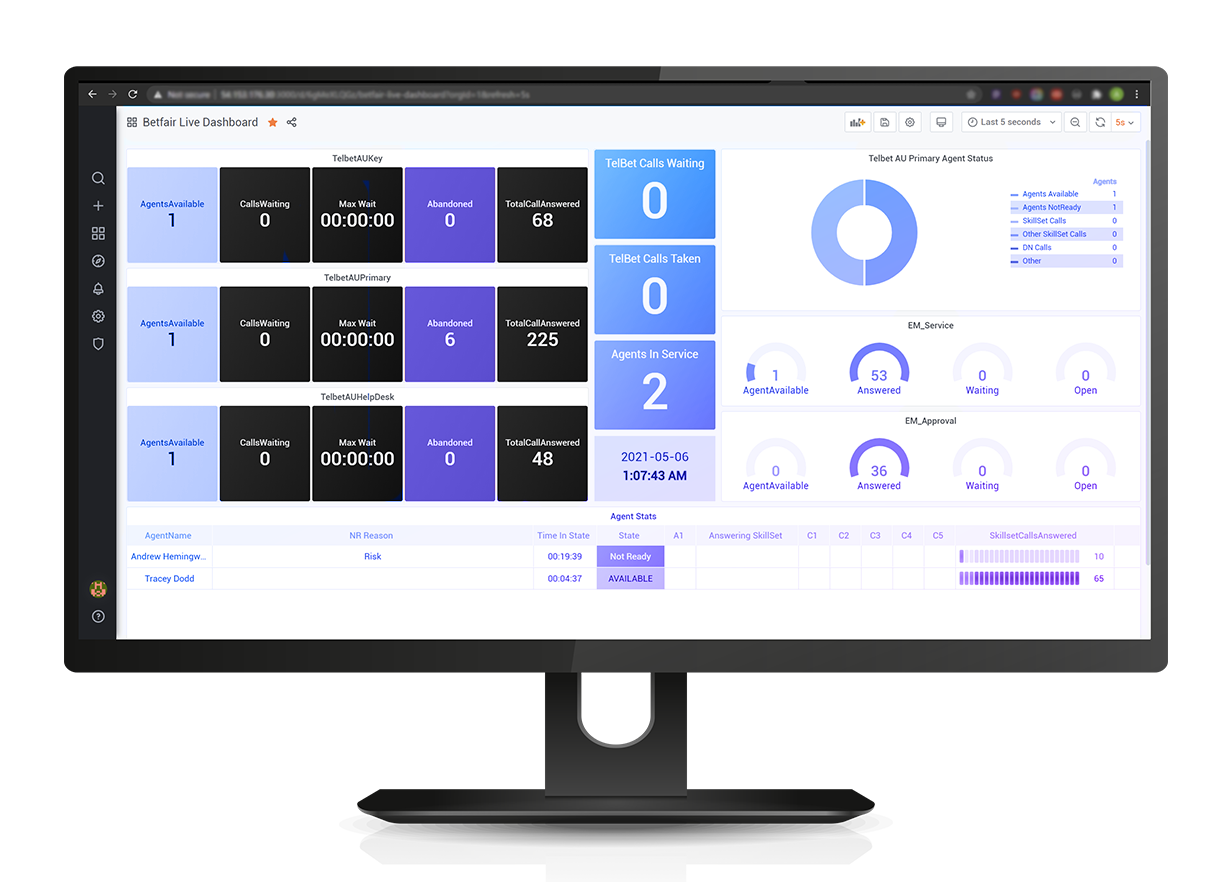
All three cover the enterprise CRMs and all three leave the mid-market to connectors. Native coverage, the five cost lines, migration friction, and what to do if the CRM is Dynamics, HubSpot or Pipedrive.