
What Amazon Connect actually costs
AWS has reorganised this pricing, and most guides to it predate the change. Amazon Connect is now billed per channel message and per voice minute, with telephony charged separately again and the rest of the catalogue moved into an appendix — so a bill is three stacks, not one rate. This page sets out what each stack contains and which dimension each is billed in, using AWS’s own pricing page and its appendix, read on 21 October 2026. It deliberately quotes no rates: rates change and vary by region, and the unit you are billed in is the part that stays useful. We sell a CRM connector that becomes one line on this bill, so read the fifth section with that in mind.
The three stacks on an Amazon Connect bill
People quote “Amazon Connect pricing” as though it were one number. It is three groups of charges that are quoted separately and add up.
- Channel usage. Four dimensions on the main pricing page: chat per message sent or received, voice per voice minute, email per email sent or received, and SMS and third-party messaging per message sent or received. The voice line explicitly notes that standard telephony rates apply on top — which is the second stack.
- Global Telephony. Quoted separately, with its own tabs for phone numbers, inbound calling, outbound calling and shared trunking. Numbers are charged per day, by type: direct inward dial (DID), toll-free (TFN), shared cost numbers, and Universal International Freephone (UIFN). Inbound and outbound calling are per minute, as is shared trunking.
- Everything else, in the appendix. Analytics, self-service, agent assistance, recording, cases, profiles and the rest are priced individually and separately from the channel rate.
The practical consequence is that a per-minute figure quoted on its own is never the whole voice cost. A voice contact draws the Amazon Connect voice minute, the telephony minute, and the daily charge for the number it arrived on — before any feature.
The two dimensions that are still per agent per month
AWS’s pricing page says there are “no minimums, no long-term contracts” and describes the product as having “zero upfront commitment, no capacity constraints, no seat-based licensing requirements, and no tokens”. That is accurate for the channels, and it is the line most comparisons stop at.
Two appendix dimensions are nonetheless billed per agent per month: forecasting and agent scheduling, and performance evaluations of agents. If your workforce-management and quality requirements are real rather than aspirational, those two turn part of the bill back into a seat count, and they scale with headcount rather than with call volume. That is the single most useful thing to know before modelling a consumption-only business case, and it is why a quiet month does not reduce them.
What the appendix actually lists, and in what unit
Worth reading in full before you assume a capability is included. As at the date above, the appendix prices these separately:
- Per minute: outbound campaigns (voice), Live Sync usage on top of the channel rate, conversational analytics for voice, real-time agent assistance on voice, screen recording per recorded minute, test and simulate on voice, external voice minutes, and third-party AI agent collaboration over bidirectional voice.
- Per message: step-by-step guides, conversational analytics for chat and messaging, end-customer self-service, real-time agent assistance on chat, test and simulate on chat, and third-party AI agent collaboration over text.
- Per item: tasks per task, cases per case created, Voice ID per transaction, email per email, inbound email for self-service and agent assistance.
- Per day: Customer Profiles per profile utilised daily — both searching profiles and reading profile objects — and external voice connectors per connector per day.
- Per agent per month: forecasting and agent scheduling, and performance evaluations.
Two of those matter beyond their price. Customer Profiles utilised daily is charged on profiles touched rather than profiles stored, so the cost follows activity and not database size. And external voice connectors per connector per day is the standing charge behind running Amazon Connect in front of a platform you have not retired — the staged-cutover route we set out in how Amazon Connect, NICE CXone and Genesys compare on CRM integration.
Customer Basic, if you are not buying the AI
The pricing page also names a Customer Basic option, described as being for customers “not ready for AI”, with the AI and workforce capabilities taken à la carte from the appendix instead. If your requirement is a competent voice contact centre with a CRM integration and nothing agentic, that is the configuration to ask AWS to price, rather than costing the full capability set and discounting it. Ask explicitly, because the headline pricing is organised around the capabilities being included.
The line item every pricing guide leaves out
None of the three stacks includes getting calls into your CRM. Amazon Connect gives agents the Contact Control Panel; it does not give them screen-pop into a Pipedrive deal, click-to-dial from a HubSpot record or a logged activity on the right Dynamics 365 contact. That is a separate layer, and unlike the channels it is normally licensed per agent per month.
Ours is US$9 per agent per month on AWS Marketplace, which puts it on the same AWS bill as the rest and may count toward an existing AWS commitment. If you do not need a CRM integration, you do not pay for one — plenty of contact centres run on the Contact Control Panel alone. The point is that a cost model which stops at AWS’s rate card is short by whatever the integration layer costs, and that line is usually the only per-seat charge in the whole estate.
Why every Amazon Connect pricing guide goes stale
AWS states that pricing “may vary by region, communication type, and third-party provider”, and the restructure that prompted this page is itself the evidence: the guides currently ranking for this term describe an arrangement that has moved. Three habits survive that:
- Model units, not rates. Work out your monthly voice minutes, messages, numbers, cases and profiles touched. Those are stable facts about your operation, and they let you re-price in minutes when a rate card changes.
- Price the features you will actually switch on. The appendix is long and most of it is optional. A list of what you will use in the first ninety days is worth more than a total for everything.
- Get the current numbers from AWS, not from an article. Including this one. Use the pricing page and the AWS Pricing Calculator for your own region, and treat anything else as a guide to the shape of the bill.
The short version
Amazon Connect is genuinely consumption-priced with no seat licence for its channels, and for most contact centres that is cheaper than a per-seat platform at the same capability. The bill is not one rate though: channel usage, telephony and appendix features are quoted separately, forecasting and performance evaluations remain per agent per month, and the CRM integration is a line nobody’s rate card includes. Model the units, price the features you will switch on, and get the rates from AWS on the day you need them.
Common questions
How is Amazon Connect priced?
Per use, in three groups of charges that are quoted separately. Channel usage is billed per chat message, per voice minute, per email and per SMS or third-party message. Telephony is priced on its own, with phone numbers charged per day by type and inbound, outbound and shared trunking charged per minute. Everything else — analytics, self-service, agent assistance, recording, cases, profiles — is priced individually in an appendix.
Does Amazon Connect charge per agent?
Not for the channels. AWS describes the product as having no seat-based licensing requirements, and chat, voice, email and messaging are all billed on usage. Two appendix dimensions are the exception and are billed per agent per month: forecasting and agent scheduling, and performance evaluations of agents. Those scale with headcount rather than with call volume, so a quiet month does not reduce them.
Is there a minimum contract or upfront commitment for Amazon Connect?
AWS’s pricing page states there are no minimums and no long-term contracts, and describes zero upfront commitment, no capacity constraints and no seat-based licensing requirements for the platform. Phone numbers do carry a daily charge for as long as you hold them, so a number you have claimed and are not using still costs money.
What does an Amazon Connect CRM integration cost on top?
It is a separate layer and it is normally the only per-seat charge in the estate, because Amazon Connect gives you the Contact Control Panel rather than screen-pop and logging inside your CRM. The ProUCX connectors are US$9 per agent per month on AWS Marketplace, which puts them on the same AWS bill. If you do not need a CRM integration you do not pay for one.
Why do Amazon Connect pricing articles disagree with each other?
Mostly because they were written at different times. AWS has reorganised this pricing around channel messages and minutes with the remaining catalogue in an appendix, and it states that pricing may vary by region, communication type and third-party provider. Model your own usage in units, then take the rates from AWS’s pricing page on the day you need them rather than from any article, this one included.
Pricing an Amazon Connect deployment with a CRM connector in it? Tell us the units — agents, monthly minutes, the CRM — and we will tell you what the connector adds and what it does not. For our own prices, see pricing.
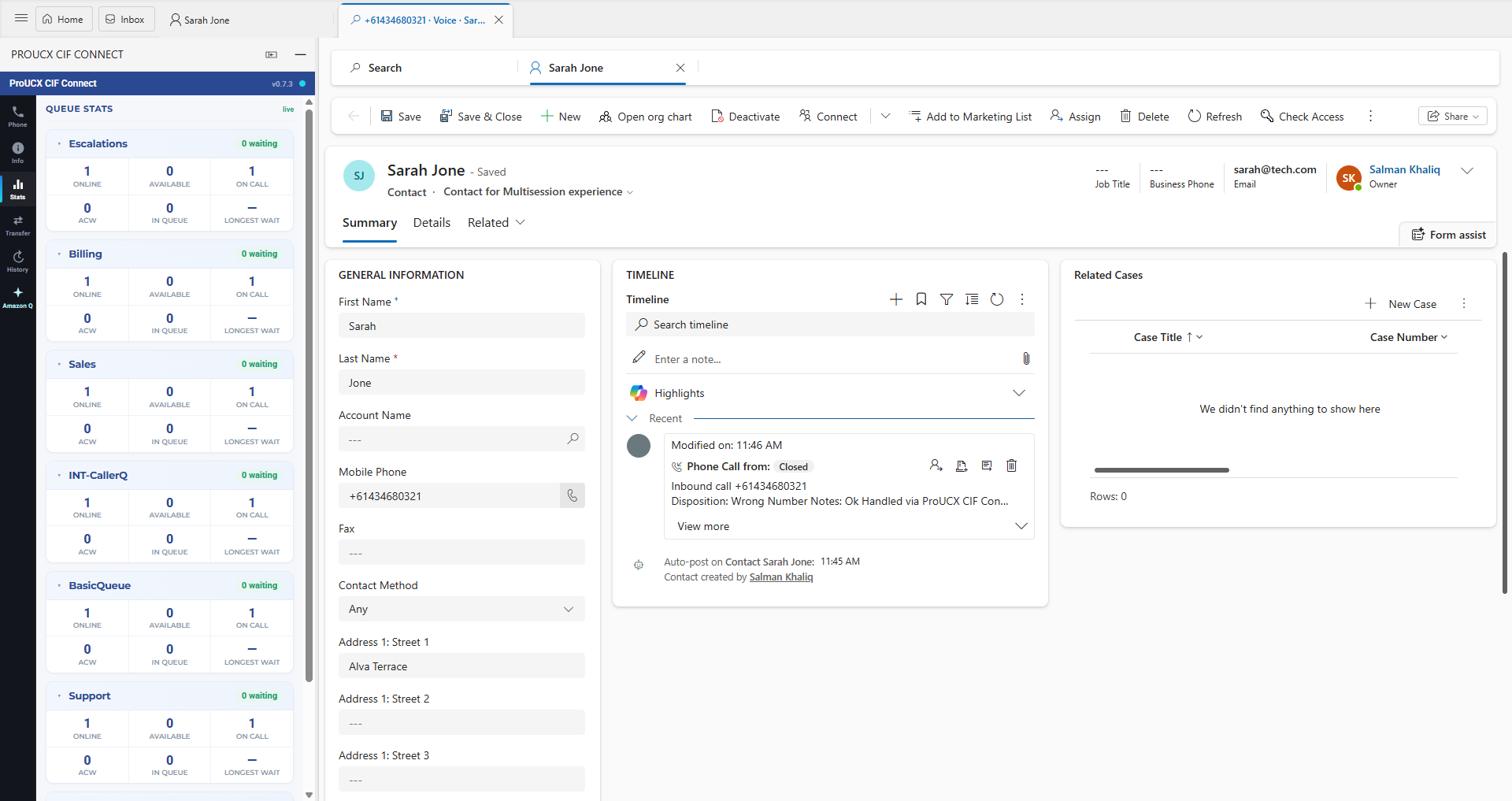
Link, embed, CTI or full workspace — four products at four prices. What screen-pop really requires, how logging differs per CRM, and the eight questions to ask before signing.
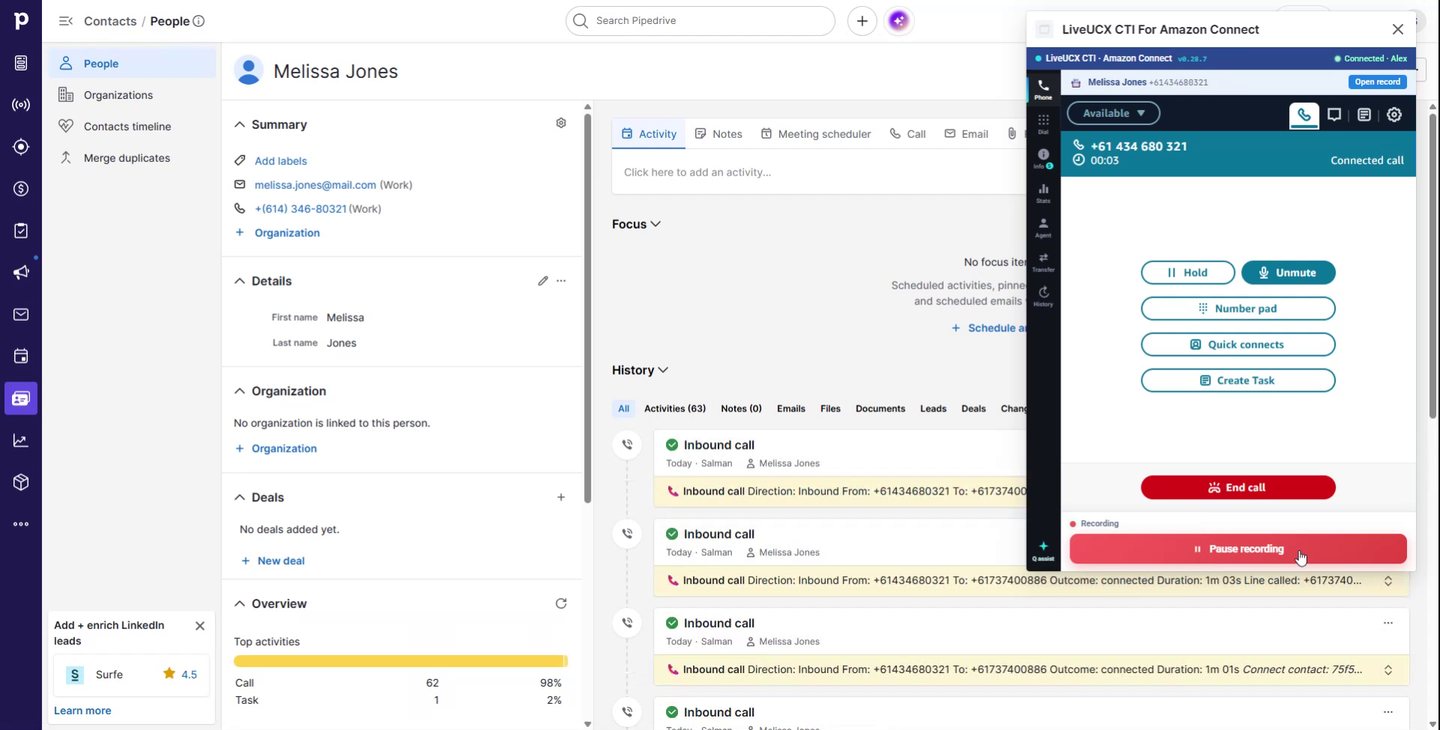
What Pipedrive’s built-in calling covers, where a CRM stops being a contact centre, and what changes when an Amazon Connect CTI takes over the call.
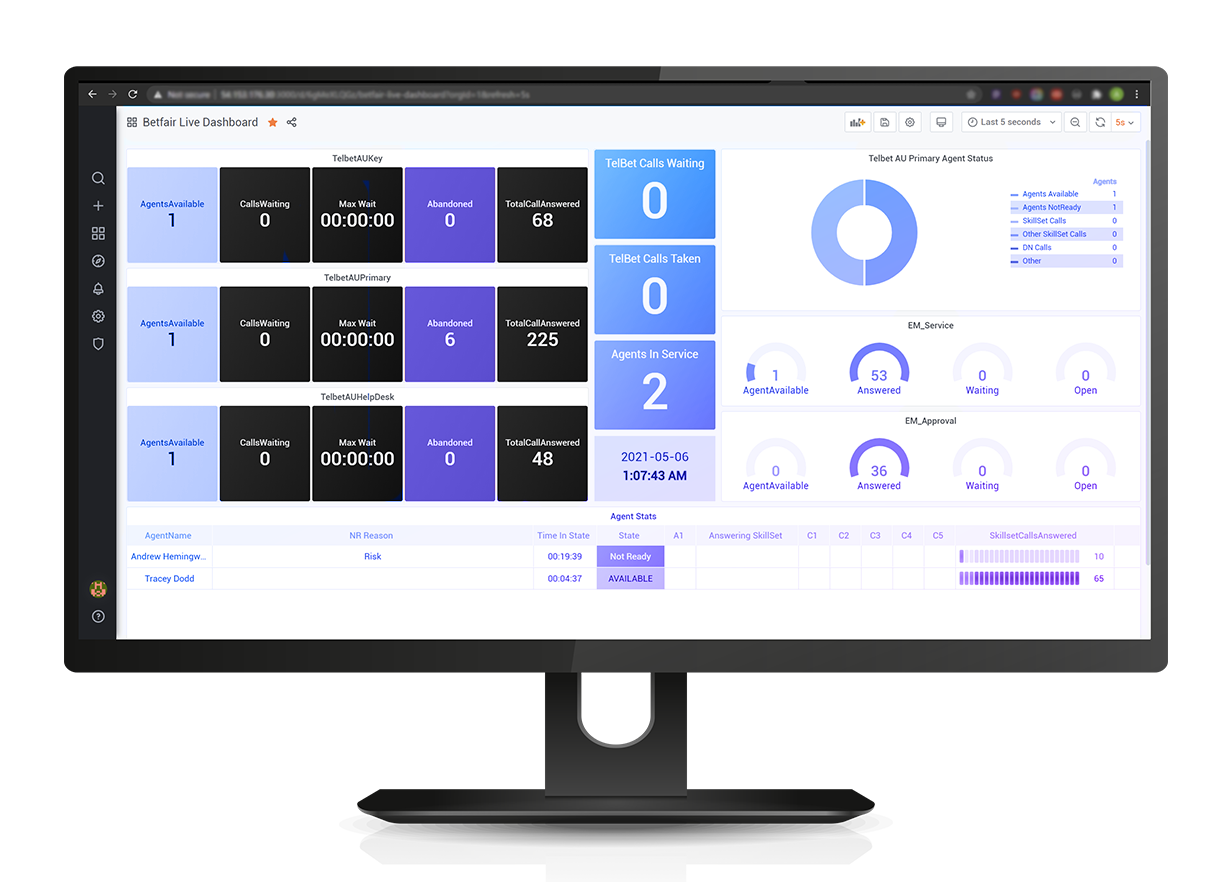
All three cover the enterprise CRMs and all three leave the mid-market to connectors. Native coverage, the five cost lines, migration friction, and what to do if the CRM is Dynamics, HubSpot or Pipedrive.